California CCPA: Privacy Policy
California has one of the most detailed privacy policy requirements among all US state privacy laws.
This page covers one piece of the picture. For the full scope of the CCPA — who must comply, the thresholds, the consumer rights and the penalties — start with our complete guide to the CCPA and cookies.
The California Consumer Privacy Act (CCPA), as amended by the California Privacy Rights Act (CPRA) and codified at Cal. Civ. Code § 1798.100 et seq., requires the privacy notice to be updated every 12 months and to contain specific lists of what was collected, sold, shared, and disclosed in the preceding year.
This article focuses exclusively on what the CCPA/CPRA requires from your Privacy Policy, based on the official text of the law.
Yes, significantly. The CPRA (Proposition 24, operative since January 2023) expanded the transparency obligations of the privacy notice in three main areas:
Added the obligation to disclose the category of sensitive personal information when collected.
Added the two new mandatory links on the site: "Do Not Sell or Share My Personal Information" and "Limit the Use of My Sensitive Personal Information."
Reinforced data minimization and proportionate retention requirements, requiring the Policy to include the period the business intends to retain each category of data.
For more on what the CPRA specifically changed, we have a dedicated guide on the California CPRA. This article covers the current consolidated law.
The privacy notice must list the categories of personal information collected about consumers in the preceding 12 months (§ 1798.130(a)(5)(B)).
The CCPA/CPRA establishes specific categories that must be used for this description, under § 1798.140(v):
Identifiers (name, address, IP address, email, Social Security number, etc.).
Personal information described in Section 1798.80 of California law.
Characteristics of protected classifications under California or federal law.
Commercial information (records of property, purchase history).
Biometric information.
Internet or other electronic network activity (browsing history, search history, ad interactions).
Geolocation data.
Audio, electronic, visual, thermal, olfactory, or similar information.
Professional or employment-related information.
Education information.
Inferences drawn to create profiles about preferences, characteristics, behavior, and aptitudes.
Sensitive personal information.
The privacy notice must identify the categories of sources from which consumers' personal information is collected (§ 1798.130(a)(5)(B)(ii)).
Typical sources include: the consumer directly through forms, analytics systems, advertising networks, data partners, social media, and publicly available sources.
The notice must explain what the data is used for (§ 1798.130(a)(5)(B)(iii)).
The CCPA/CPRA defines "business purpose" (§ 1798.140(e)) with specific categories: auditing ad impression counts, ensuring security and integrity, debugging errors, short-term transient use, performing services on behalf of the business, advertising and marketing (except cross-context behavioral advertising), internal research, and quality verification activities.
The notice must identify the categories of third parties with whom the business shares consumers' personal information (§ 1798.130(a)(5)(B)(iv)).
§ 1798.130(a)(5)(C) requires the privacy notice to include:
A list of categories of personal information sold or shared about consumers in the preceding 12 months, by category; or a statement that the business has not sold or shared personal information.
A list of categories disclosed for business purposes in the preceding 12 months; or a statement that no such disclosure occurred.
These two lists must be kept separate in the privacy notice.
The notice must describe the rights guaranteed by the CCPA/CPRA and the designated methods for submitting requests (§ 1798.130(a)(5)(A)):
Right to know and access (§ 1798.100, 1798.110, 1798.115).
Right to deletion (§ 1798.105).
Right to correction of inaccurate data (§ 1798.106).
Right to opt-out of sale and sharing (§ 1798.120).
Right to limit use of sensitive personal information (§ 1798.121).
Right of non-discrimination (§ 1798.125).
And the two or more designated methods for submitting requests, including at minimum a toll-free telephone number.
§ 1798.100(a)(3) requires that, at or before the point of collection, the business inform consumers of the length of time it intends to retain each category of personal information, including sensitive personal information, or the criteria used to determine that period.
The business shall not retain a consumer's personal information for longer than is reasonably necessary for the disclosed purpose.
§ 1798.135 requires the Privacy Policy to mention and the site to provide, clearly and conspicuously:
"Do Not Sell or Share My Personal Information": a link to a page where the consumer can opt out of the sale and sharing of their data. Sharing, defined as transfer for cross-context behavioral advertising, is included even without monetary consideration.
"Limit the Use of My Sensitive Personal Information": a link that allows the consumer to limit the use of sensitive personal information to what is necessary to provide the products or services reasonably expected.
The business may use a single combined link that clearly allows exercising both options.
Alternatively, the business may honor the opt-out preference signal of the Global Privacy Control (GPC) when sent by the consumer, instead of maintaining the links. In that case, the Policy must state that the site respects the GPC.
If the business collects sensitive personal information, the privacy notice must expressly disclose this (§ 1798.100(a)(2)).
Sensitive personal information under the CCPA/CPRA (§ 1798.140(ae)) includes: Social Security number, driver's license, or passport number; login credentials and financial account access codes; precise geolocation; racial or ethnic origin, citizenship status, religious beliefs, union membership; contents of private communications; genetic data; neural data; biometric data for identification; health information; sex life or sexual orientation.
For each category of sensitive information collected, the Policy must explain:
For what specific purpose it is collected.
Whether it is sold or shared, and with whom.
How the consumer can limit its use (via "Limit the Use of My Sensitive Personal Information" link or via GPC).
A specific feature of the CCPA/CPRA is the 12-month lookback in access requests.
When a consumer makes an access request, the response must cover the period of 12 months preceding receipt of the request (§ 1798.130(a)(2)(B)).
After adoption of specific regulations, the consumer may request information beyond 12 months for data collected from January 1, 2022, if it is not impossible or would not involve disproportionate effort.
The Privacy Policy must mention this 12-month lookback so the consumer understands which time period is covered by their request.
§ 1798.130(a)(1) requires two or more designated methods for submitting requests, including at minimum a toll-free telephone number.
Businesses that operate exclusively online with a direct consumer relationship may limit themselves to an email address.
The business must make its website available for request submission if it maintains a website.
The business cannot require the consumer to create a new account to exercise their rights. It may require use of an existing account.
Data collected for identity verification may be used only for that purpose, not for other uses (§ 1798.130(a)(7)).
If the business may have consumers under 16 years of age, the Privacy Policy must describe the special protections applicable:
For consumers between 13 and 15: the business cannot sell or share data without affirmative authorization from the consumer themselves (§ 1798.120(c)).
For consumers under 13: parental or guardian authorization is required.
A business that willfully disregards the consumer's age is deemed to have actual knowledge of it.
The data protection officer must ensure that the age verification process, where applicable, is operational and documented.
§ 1798.150 grants the consumer the private right of action for security breaches, with damages of US$ 100 to US$ 750 per consumer per incident.
Before initiating any action for statutory damages, the consumer must provide written notice to the business 30 days in advance. If the business cures the violation within the period and provides a written statement that no further violations will occur, no action may be initiated.
The Privacy Policy must mention this right and how the consumer can exercise it.
§ 1798.130(a)(5) requires the privacy notice to be updated at least once every 12 months.
This update must reflect what was collected, sold, shared, and disclosed for business purposes in the preceding 12 months. A generic, outdated notice is not sufficient: the business needs an internal mandatory annual review process.
Situations requiring immediate update, in addition to the annual review:
Adding a new category of data collected.
New third parties receiving data.
Changes in sale or sharing practices.
New purposes for data use.
Any change to opt-out links or submission methods.
CCPA/CPRA violations are investigated and enforced by the California Privacy Protection Agency (CPPA) and the California Attorney General.
The CPPA can impose administrative fines of up to US$ 2,500 per violation and up to US$ 7,500 for intentional violations or violations involving minors. The Attorney General can seek civil penalties in the same amounts.
There is no guaranteed cure period before CPPA actions. The agency has discretion to investigate without any obligation to grant advance notice.
AdOpt ensures that what is written in the Policy has real correspondence with what actually happens on the site.
The automatic scan identifies all active technologies, feeding the list of data categories and third parties. The consent management platform ensures that the opt-out and sensitive information limitation mechanisms work as described.
The GPC is honored automatically when sent by the user. Every consent interaction is logged. If the CPPA or Attorney General requests evidence, the record is available.
Over 60,000 websites already run with AdOpt.
Privacy is not a banner. It is a position.
Want to build a Privacy Policy for your site that complies with the CCPA/CPRA? Talk to our team.
Visible and accessible link on all pages of the site.
Updated at least once every 12 months (§ 1798.130(a)(5)).
Categories of personal information collected in the preceding 12 months (§ 1798.130(a)(5)(B)(i)).
Categories of sources of personal information (§ 1798.130(a)(5)(B)(ii)).
Business or commercial purpose for collecting, selling, or sharing (§ 1798.130(a)(5)(B)(iii)).
Categories of third parties with whom data is shared (§ 1798.130(a)(5)(B)(iv)).
List of categories sold or shared in the preceding 12 months (§ 1798.130(a)(5)(C)(i)).
List of categories disclosed for business purposes in the preceding 12 months (§ 1798.130(a)(5)(C)(ii)).
Consumer rights and how to exercise them, with process and deadlines (§ 1798.130(a)(5)(A)).
Two or more submission methods, including a toll-free telephone number (§ 1798.130(a)(1)).
"Do Not Sell or Share My Personal Information" link or statement of honoring GPC (§ 1798.135).
"Limit the Use of My Sensitive Personal Information" link when applicable (§ 1798.121, 1798.135).
Categories of sensitive personal information collected, when applicable (§ 1798.100(a)(2)).
Retention period for each category of data (§ 1798.100(a)(3)).
12-month lookback for access requests mentioned (§ 1798.130(a)(2)(B)).
Private right of action for security breaches mentioned (§ 1798.150).
Protection for minors aged 13 to 15 and under 13 (§ 1798.120(c)).
Non-discrimination policy for consumers exercising their rights (§ 1798.125).
1. How often does the Privacy Policy need to be updated under the CCPA/CPRA?
At least once every 12 months, under § 1798.130(a)(5). This goes beyond updating only when there are material changes. The business needs a mandatory annual review process, and the lists of categories sold, shared, and disclosed in the preceding 12 months must be regularly updated.
2. What is the "12-month lookback" and how does it affect the Privacy Policy?
§ 1798.130(a)(2)(B) requires that the response to a consumer access request cover the 12 months preceding receipt of the request. The Privacy Policy must mention this period so the consumer understands which time window is covered by their request.
3. Does the Privacy Policy need to mention the CCPA private right of action?
Yes. § 1798.150 grants consumers the right to file civil lawsuits for security data breaches. The Policy must mention this right and the process: the consumer must provide written notice to the business 30 days in advance before initiating action for statutory damages.
4. Is the toll-free telephone number really mandatory?
Yes. § 1798.130(a)(1) requires the business to provide two or more designated methods for submitting requests, including at minimum a toll-free telephone number. The exception applies to businesses that operate exclusively online with a direct consumer relationship, which may limit themselves to an email address.
5. What did the CPRA add that was not in the original CCPA?
The CPRA added: the right to correct inaccurate data (§ 1798.106), the right to limit use of sensitive personal information (§ 1798.121), the mandatory "Limit the Use of My Sensitive Personal Information" link, the distinction between "sale" and "sharing" for behavioral advertising, the expanded definition of sensitive personal information (including neural data), and data minimization and proportionate retention requirements. All of this must be reflected in the Privacy Policy.
Ready to build a Privacy Policy for your site that complies with the CCPA/CPRA? Talk to our team.
California CCPA compliance rests on documents that need to agree with each other: the cookies policy, which declares every tracker and its purpose; the privacy portal, which is where the consumer exercises their rights and you keep the record of it.
If you also operate in Canada, the equivalent document under federal law is covered in our guide to the PIPEDA privacy policy.
Tags
Related posts

GDPR and Cookies all you need to know
Understanding the General Data Protection Regulation (GDPR) and its impact on cookies is essential. So, let's break it down, step by step.

Data Mapping or Data Inventory - a life jacket for the DPO!
With the data mapping we have a clear understanding of the 5 stages that every data goes through in a company.

Utah UCPA and Cookies: All you need to know
Utah UCPA explained: the most business-friendly US state privacy law, dual threshold requirement, opt-out for sensitive data, no right to correct, guaranteed 30-day cure period, and key differences from other state laws.

5 Signs Your Website Needs an Cookie Consent Strategy
How does your website handle LGPD? What strategies does it use to comply with the General Data Protection Law? Have you thought about using a cookie notice but don't know if your site has cookies or if it's enough? If you can't answer these questions, be cautious! Your page may be exposed to fines and other sanctions.

Texas TDPSA and Cookies: All You Need to Know
Your website have users accessing from Texas? So be ready… the Texas Data Privacy and Security Act is here to shake things up. Don't worry; we've got your back. This guide will walk you through everything you need to know to ensure your website complies with the new regulations.

Virginia VCDPA: Cookies Policy
What the Virginia VCDPA requires from your Cookies Policy: targeted advertising disclosure, consent standards, tracker categories, opt-out mechanisms, and the 30-day cure period explained.
GDPR Legal Basis: An Introduction
In this article, we'll explore the GDPR foundations and provide practical insights from the basics to more advanced concepts of its legal basis.

Connecticut CTDPA: DSAR Privacy Portal
How to handle DSARs under the Connecticut CTDPA: 5 consumer rights, opt-outs without mandatory authentication, 60-day appeal deadline, 15-day consent revocation, and AG-only enforcement.

The Impact of Cookie Banners on Your E-commerce - LGPD
Having a cookie banner on your brand's website has become indispensable for many. However, for e-commerce websites, it has practically become an obligation to have one. This is because this type of website has a technological composition in which cookies are a structural part. Login flow, items in the shopping cart, recommendation showcases, remarketing... Most of them rely on cookies.

Oregon OCPA and Cookies: All You Need to Know
Everything about the Oregon OCPA: who must comply, the payment transaction exclusion, 25% revenue threshold, derived data in scope, GPC requirement from January 2026, and elimination of the cure period.
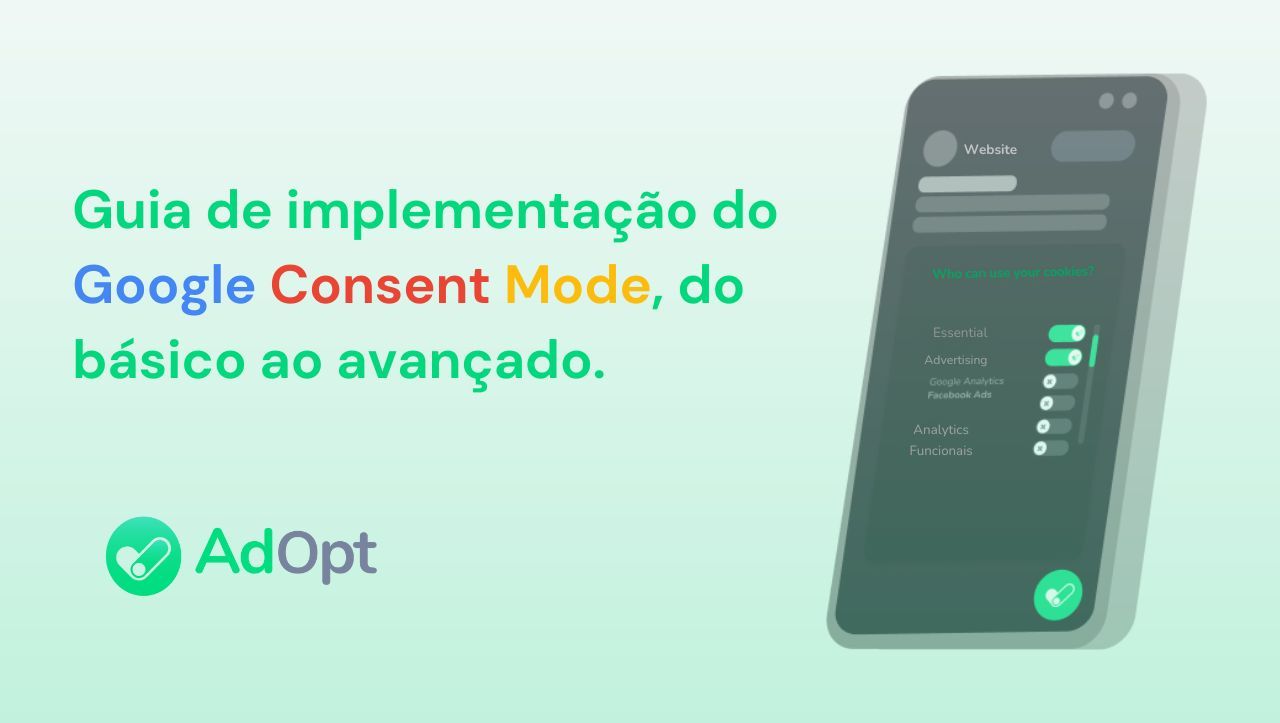
Google Consent Mode: Beginner to Advanced Guide.
Google Consent Mode (GCM) is nothing more than a way for you to integrate the consent you collect from your visitors into Google technologies. In this way, upon receiving this consent information, collection can only occur with authorization, thus complying with the legislation and having direct evidence of compliance as defense for both you and Google.
Oregon OCPA: Cookies Policy
What the Oregon OCPA requires from your Cookies Policy: opt-out link, GPC from January 2026, opt-out without authentication, derived data in scope, teen protections, and the elimination of the cure period.

Why are cookie banners everywhere?
Want to understand why there are cookie banners on every website you visit today? This article is for you!
Oregon OCPA: Privacy Policy
What the Oregon OCPA requires from your Privacy Policy: actively monitored contact channel, detailed third-party descriptions, derived data in scope, GPC from January 2026, and the elimination of the cure period.

Everything about the Brazilian LGPD - General Data Protection Law.
All the important information about the General Data Protection Law - LGPD: what it is, why it exists, how it works, when it came into force, who it applies to, potential fines, steps for compliance, and its legal principles.

IOWA ICDPA: Cookies Policy
What the Iowa ICDPA requires from your Cookies Policy: opt-out for data sales and targeted advertising, opt-out model for sensitive data, no GPC requirement, no specific link text required, and the 90-day cure period.

How to Choose a CMP (Consent Management Platform)?
Using a CMP (Consent Management Platform) is a great way to make efforts to adapt to new privacy regulations like GDPR, LGPD, DPDPA, CCPA and more...

Florida FDBR: Cookies Policy
What the Florida FDBR requires from your Cookies Policy: targeted advertising across affiliated sites, opt-out for sensitive data and voice recognition, dark patterns, and tripled penalties.

Outsourcing the DPO (DPOaaS), Is It a Good Idea?
The Data Protection Officer, or DPO, is a new position that emerged all over the globe with the new privacy regulations, and more recently at the LGPD. Although it already existed in other international legislations, such as the EU's GDPR, it is still a novelty here since 2020. Along with it comes the possibility of outsourcing, known as DPO as a Service (DPOaaS).
Connecticut CTDPA and Cookies: All You Need to Know
The Connecticut Data Privacy Act (CTDPA) is a state regulation designed to protect the privacy of Connecticut residents. It also regards cookies, so in this article we will help you understand all about this new privacy regulation.

California CCPA: DSAR Privacy Portal
How to handle DSARs under the California CCPA/CPRA: 7 consumer rights, 45-day deadline, toll-free number required, 12-month lookback, private right of action for breaches, and CPPA enforcement.

New Hampshire NHDPA: DSAR Privacy Portal
What is a DSAR under NHDPA? Complete guide to consumer rights, response deadlines, and building a compliant Privacy Portal for your site.

What is the difference between cookies, local storage, and session storage?
Despite cookies being more well-known, what is the main difference between cookies and session storage and local storage? Why choose one over the other? This article will help you with these doubts!
Florida FDBR: Privacy Policy
What the Florida FDBR requires from your Privacy Policy: annual updates, 6 mandatory content categories, specific notices for sensitive and biometric data sales, and the 7 consumer rights.

ROPA in LGPD? Get to Know the Records of Processing Activities.
Brazilian LGPD - General Data Protection Law brought with it several acronyms and specific terms. Many of them are imported from other countries and regulations. One of them is ROPA (Record Of Processing Activities), adapted in Brazil to Registros das Atividades de Tratamento. An essential document for any DPO, Data Processor.

The Differences Between Data Controller and Data Processor - LGPD
Now that we have the data flow within your company, we need to highlight 2 aspects of LGPD that will help you determine the extent of your responsibility in relation to the many points listed in the company. I'm talking about the difference between Data Controller and Data Processor.

How to choose a Cookie Banner for your website
What are the criteria for this choice, and what are the strengths and weaknesses of each option? Well, we're here to help you because this decision needs to be well thought out!

Understand the meaning of the LGPD for your company
Surely you've already seen the predictions of fines and sanctions, processes. But, what does it mean to your company?
New Hampshire NHDPA and Cookies: All you need to know
Discover what the New Hampshire Privacy Act (NHDPA) means for your business. Learn about compliance steps, consumer rights, penalties, and how to simplify it all with AdOpt, a Google-certified CMP.

What is a privacy policy?
A privacy policy is a document that outlines how an organization collects, uses, discloses, and manages a customer's data. It's essential for building trust with users and complying with legal requirements. However, if you're not familiar with it, don't worry as we're here to help you.

How long can we ignore LGPD?
LGPD is in effect. Despite that, there are still many companies ignoring it, but is that possible? How long can we ignore LGPD?
New Hampshire NHDPA: Privacy Policy
Learn what your Privacy Policy must contain under the NHDPA. We break down the 8 mandatory elements and how to comply with New Hampshire's data privacy law.

What are Terms of Use and their importance for the LGPD?
Ignoring Terms of Use and their significance within a website, particularly now with LGPD, is a common mistake that both consumers and website owners frequently commit.

Tenesse TIPA: Privacy Policy
Learn what your TIPA Privacy Policy must include to comply with the Tennessee Information Protection Act from consumer rights and targeted advertising disclosures to the NIST affirmative defense, appeal mechanisms, and how to keep your notice aligned with your operational program.

Montana MTCDPA: Cookies Policy
Learn about how to apply Montana MTCDPA Cookies Policy in your site
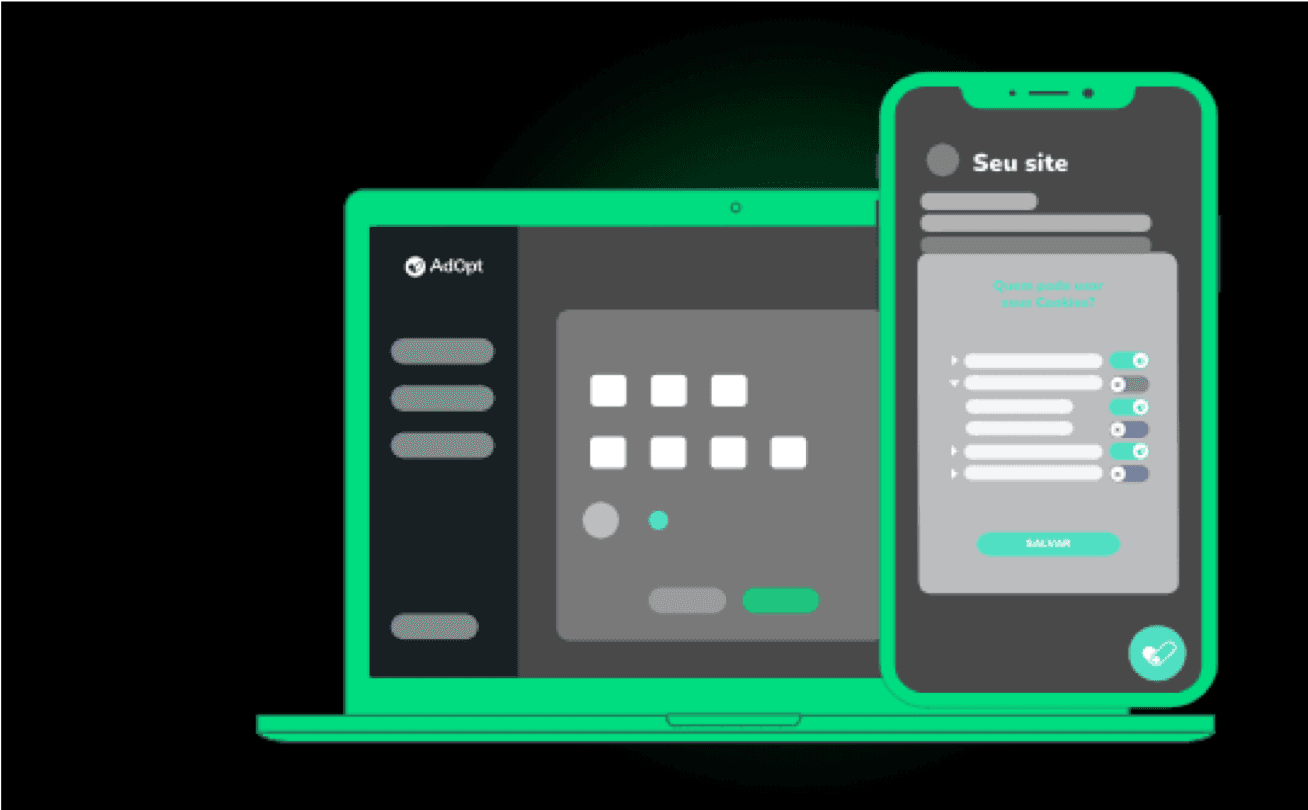
How does a cookie banner operate?
Here is a step-by-step explanation of how consent registration works in AdOpt.
Virginia VCDPA: DSAR Privacy Portal
How to handle DSARs under the Virginia VCDPA: consumer rights, 45-day response deadlines, the appeal process, free requests twice per year, and how to build a compliant Privacy Portal.
Tennessee TIPA and Cookies: All You Need to Know
If you're looking to understand how this law impacts businesses in Tennessee, especially those dealing with digital cookies, you're in the right place. This article will simplify the complexities of compliance and make them easy to grasp, even if you're just starting to learn about data privacy.

California CPRA and Cookies: All you need to know
California CPRA explained: CCPA vs CPRA timeline and key differences, sensitive personal information, sharing of data, CPPA enforcement, GPC requirement, and tripled penalties for minors.

Google Analytics 4 Cookie Consent: What Changes in Your Data and How to Set It Up
Google Analytics 4 cookie consent explained: what GA4 does when a visitor says no, what changes in your reports, and how to check your setup.

GDPR, LGPD, and CCPA: What Are These Laws, Similarities, and Differences
LGPD, GDPR, and CCPA are data privacy regulations. In this article, we discuss their similarities and differences for practical application.
California CPRA: DSAR and Privacy Portal
California CPRA DSAR guide: new rights to correct and limit SPI, opt-out without multiple steps, GPC as valid opt-out, 12-month minor rule, private right of action, and CPPA enforcement.
Oregon OCPA: DSAR Privacy Portal
Oregon OCPA DSAR guide: the L.O.C.K.E.D. rights, opt-out without authentication, derived data in deletion scope, 15-day revocation deadline, GPC from January 2026, and the elimination of the cure period.

Texas TDPSA: Privacy Policy
The Texas Data Privacy and Security Act (TDPSA) introduces sweeping changes to how businesses collect, use, and disclose personal data—and your privacy policy is now a frontline compliance tool. This article is a comprehensive guide for any company serving Texas residents, explaining how to align your privacy practices with the new legal standards.
Florida FDBR and Cookies: All You Need to Know
Everything you need to know about the Florida Digital Bill of Rights (FDBR): who must comply, the $1 billion threshold, 7 consumer rights, FIPA vs FDBR explained, penalties, and cookies.
Explore AdOpt
Autor
João Bruno
26 May 2026
AdOpt

Relevant posts
What is a privacy policy?

Colorado CPA and Cookies: All You Need to Know
Tennessee TIPA and Cookies: All You Need to Know
Florida FDBR and Cookies: All You Need to Know
Texas TDPSA and Cookies: All You Need to Know
Google Consent Mode: Beginner to Advanced Guide.
Oregon OCPA and Cookies: All You Need to Know

Axeptio Strengthens its International Expansion with the Acquisition of AdOpt
Utah UCPA and Cookies: All you need to know
How to choose a Cookie Banner for your website


Address: 7345 W Sand Lake Road, Ste 210 Office 5898 Orlando, FL 32819
15 Rue du Général Campredon, 34000 Montpellier, France
207 Rue de Bercy, 75012 Paris, France
EIN: 86-3965064
Phone: +1 (407) 768-3792
AdOpt
Resources
Product
Certifications