10 Marketing Processes You Should Rethink under the LGPD!
One of the biggest dilemmas for those who start studying and understanding the LGPD more deeply is the realization that, as challenging as the compliance process may be, it is only the beginning. Yes, a series of changes and adjustments should now become part of the company's routine. There are several marketing processes involving personal data that you must reconsider now because of the LGPD!
Therefore, compliance with the LGPD goes beyond setting up a cookie banner or updating the privacy policy. Depending on the size of your company, numerous processes need to be reviewed and adjusted to the new realities established by the law.
The bureaucracy may seem extensive and never-ending for companies. However, we always need to put ourselves in the shoes of visitors, data subjects. Remember, both you and I are data subjects before being companies or professionals – we are citizens! The LGPD's priority is precisely to empower data subjects so that they, as individuals, have full rights and access to the necessary information regarding the use of their personal data.
That's why we're here!
Let's be the professionals who see the legislation as a new opportunity to raise the bar, to apply our knowledge with quality and respect to our clients and visitors!
The LGPD has brought new rules, new marketing processes, new positions...
So, how can we not anticipate the new standards and the new quality references that will ultimately be perceived by our clients?
One of the beautiful concepts, such as Privacy by Design (we've already discussed it here on the blog), can and should always be brought to the forefront!
That being said, I want to help you! Below, then:
1 - Sharing data lists with suppliers and third parties (freelancers, real estate agents, salespeople...)
If by this point it's not already obvious to you, I don't know how else to make clear the risk of this type of sharing. After all, the visitor has provided their personal and sensitive data to the company. They have no way of knowing that you have numerous other people hanging on to your mailing list.
So be very careful with this practice! Especially if there is no confidentiality or liability agreement between the parties involved!
It may be that your business model requires this distribution of data, so reinforce it - clearly, in your policy and terms! Remember, when in doubt, prioritize privacy!
Does this list have consent for Facebook actions? What is the origin of the list? You may have noticed that since GDPR, Facebook has already been questioning advertisers when they upload email lists... I wonder why, right?
Whether you are a marketing department or a third-party agency to the client, always question these lists and avoid extending the channels of direct communication with the customer as much as possible, as it may violate consent and/or the legal basis that supports the use of the data.
3 - Buying cold lists to send emails, SMS, and SPAM. (If it was a crime before, now it's even more so)
Who hasn't thought about "obtaining" a contact list, cast the first stone! Or even, who has never been approached by companies that sell these cold leads!
Lucky are those who generate quality content and transparency to the point where visitors trust the company with their data...
It's no wonder that email marketing tools have numerous warnings to avoid spam. It harms everyone's reputation, and the internet has no patience for spam, agree?
(A practice that may seem innocent but can violate the rights of data subjects)
It may seem innocent, but it's only an appearance! Just like the points above, data subjects have entrusted their data for that exclusive purpose. Any interaction that goes beyond that can directly violate the rights acquired through consent and/or legal basis.
(Access levels for sensitive data - responsibility contract)
Here we enter the realm of management and processes!
Several marketing tools allow us to create hierarchies within their user accounts. This is precisely because each person has their level of activity and responsibilities.
It is a fact that many companies today work with decentralized or even horizontal management. But when things go wrong, who will be held responsible? Avoid problems by reviewing approval levels and access to data according to your team's responsibilities. After all, the actions of one employee affect the entire organization, and this should be considered as a contingency.
6 - Hiring freelancers and professionals with high turnover without a data responsibility contract with clients.
(The infamous "flash drive")
This point is quite similar to the previous one bu,t has an even greater detail. Third-party professionals have limited or even extended responsibilities based on their contracts and the criteria they are bound to. So, every time a third party has access to your company's database, what security do you have over that data?
What guarantee does the data subject have when the data is exposed? Yes, it's basic! But there have been many cases of Employee X or Agency Y who deleted everything before leaving or took everything with them. And then? Was there a contract?
7 - CTAs in campaigns and ads saying "leave your contact information below if you want to receive..."
This CTA (call-to-action) may seem "cheesy," but it is still widely used, and as they say, "if there's a rule, it's because there's a story behind it," meaning it works.
Be cautious with this kind of approach, especially if your audience is less tech-savvy and unaware of the risks of the internet.
Remember the case of people providing their data on a Facebook post to get a superhero credit card? Well, you don't want your company's reputation to be associated with an opening for scammers.
The LGPD is not only applicable to the online environment.
So, which offline, in-person actions should also be adapted to comply with the guidelines? Do you use registration forms? What is the data collection process in physical environments?
Every company has its own reality, but I have seen companies using "offline" consent forms (actual printed forms) to be attached to visitor registrations! Or even collecting all registrations via tablets, where consent is also recorded in the CRM.
Our radar should be tracking both online and offline! If you bring everything online, for example, through QR codes, you can use the AdOpt cookie banner as your consent tool and also implement tracking tags on the same landing page!
Perhaps this way, you can not only automate the opt-in process but also have authorized remarketing at the same time!
The days when that Excel spread sheet full of emails from the 90s was considered a treasure for a company are gone.
Aside from being a vanity metric, it is also a significant cost within automation tools. Outdated and cold email lists pose a huge risk to the organization today. Avoid it, eliminate all of that, and make an effort to obtain updated consent from your active base as soon as possible!
Don't say I didn't warn you!
10 - Including personal data (such as personal cell phone numbers) in the Company's organizational chart without obtaining approval in the employment contract.
Some companies like marketing agencies, have their organizational chart, a source of joy for SDRs when making those old-fashioned cold calls and scheduling appointments for the Field Sales team! #WhoHasNeverDoneThat?
If you're not familiar with it, let me explain!
Many agencies, especially the larger ones in São Paulo/BR, still have the infamous "organizational chart" displayed at the reception.
Accessing this file brings great joy to the sales team because it not only reveals the decision-makers but also provides their contact information!
However, there is also a potential danger lurking here!
If your organizational chart contains not only employees' professional data but also the personal cell phone number of an employee who didn't want to use two phones, for example...
Is this sharing of personal data specified in the employment contract?
It may not be a problem now, but in times of crisis, labor law can utilize all available resources. Why wouldn't it consider this aspect as well?
In the end, our goal has never been to predict doom for companies or to be part of the LGPD's Apocalypse Cavalry. But since we've been in the market for some time, these kinds of issues always catch our attention when we start data mapping and having conversations with colleagues.
Do you remember any other processes that could be included in this list?
Comment below, maybe it will help colleagues in the journey of compliance!
Tags
Related posts

Oregon OCPA: DSAR Privacy Portal
Oregon OCPA DSAR guide: the L.O.C.K.E.D. rights, opt-out without authentication, derived data in deletion scope, 15-day revocation deadline, GPC from January 2026, and the elimination of the cure period.

LGPD and Cookies all do you need to know?
In this article, you will have a great introduction to the topic, as well as various other variations that revolve around the subject: Cookies and LGPD.
Google Consent Mode: Beginner to Advanced Guide.
Google Consent Mode (GCM) is nothing more than a way for you to integrate the consent you collect from your visitors into Google technologies. In this way, upon receiving this consent information, collection can only occur with authorization, thus complying with the legislation and having direct evidence of compliance as defense for both you and Google.

Data Mapping or Data Inventory - a life jacket for the DPO!
With the data mapping we have a clear understanding of the 5 stages that every data goes through in a company.

Connecticut CTDPA: DSAR Privacy Portal
How to handle DSARs under the Connecticut CTDPA: 5 consumer rights, opt-outs without mandatory authentication, 60-day appeal deadline, 15-day consent revocation, and AG-only enforcement.

Florida FDBR: Privacy Policy
What the Florida FDBR requires from your Privacy Policy: annual updates, 6 mandatory content categories, specific notices for sensitive and biometric data sales, and the 7 consumer rights.
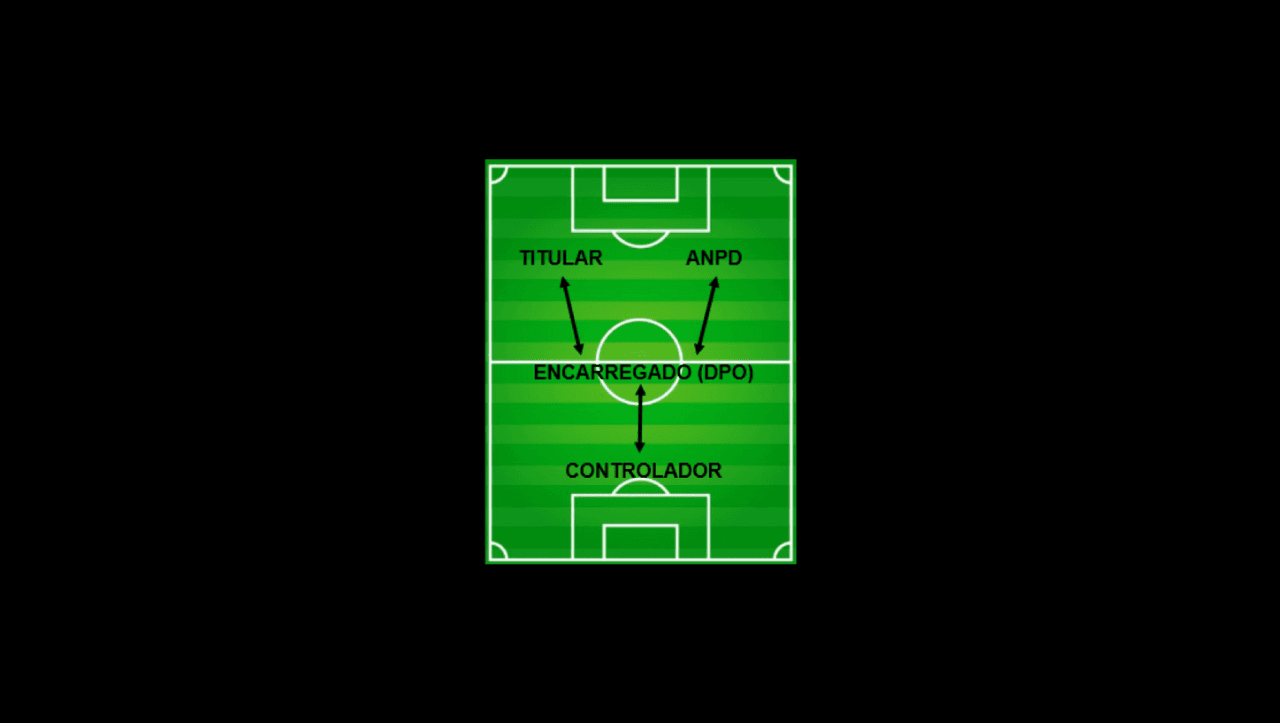
Responsibilities of a data protection officer.
Drawing an analogy from the world of soccer, we can think of the DPO as the "midfielder" of the team, responsible for connecting the defense and the attack.

California CCPA: Privacy Policy
What the California CCPA/CPRA requires from your Privacy Policy: 12-month lookback, annual updates, Do Not Sell link, sensitive PI disclosures, toll-free number, and the 7 consumer rights.
California CCPA: Cookies Policy
What the California CCPA/CPRA requires from your Cookies Policy: Do Not Sell or Share link, GPC compliance, sale vs sharing distinction, sensitive PI opt-out, and annual updates.

What is the ideal privacy policy for your company?
Is there an ideal and _foolproof_ Privacy Policy? This is one of the most difficult questions to answer nowadays. Especially considering all the jurisprudence already established in Europe with the GDPR, the extensive history of cases, and the numerous tips we see in the market. Not to mention the judicial decisions that are already emerging in Brazil with the LGPD.
GDPR and Cookies all you need to know
Understanding the General Data Protection Regulation (GDPR) and its impact on cookies is essential. So, let's break it down, step by step.
LGPD & COOKIES - ANPD Releases "Guidance on Cookies and Personal Data Protection"
On October 18, 2022, the National Data Protection Authority (ANPD) released the "Guidance on Cookies and Personal Data Protection." Highly anticipated by professionals in the field, this document is of utmost importance as it examines various applicable legal scenarios and establishes the requirements to be observed in the case of cookie usage.

Virginia VCDPA: Privacy Policy
What the Virginia VCDPA requires from your Privacy Policy: the 5 mandatory content categories, sensitive data obligations, targeted advertising disclosure, and the appeal process explained.
Oregon OCPA: Cookies Policy
What the Oregon OCPA requires from your Cookies Policy: opt-out link, GPC from January 2026, opt-out without authentication, derived data in scope, teen protections, and the elimination of the cure period.

California CPRA: DSAR and Privacy Portal
California CPRA DSAR guide: new rights to correct and limit SPI, opt-out without multiple steps, GPC as valid opt-out, 12-month minor rule, private right of action, and CPPA enforcement.
5 Common Cookie Consent Mistakes Hurting Your Compliance
Discover the 5 common **cookie consent mistakes** that risk your **compliance** and learn how to avoid heavy **fines**. Simplify your **data privacy** strategy using a reliable **[Cookie notice/banner](https://goadopt.io/en/blog/why-the-cookie-banner/)**.

LGPD for marketing | A practical guideline.
Every day, millions of users generate data on the web, which is used by companies around the globe to improve their offerings. Therefore, in 2018, a law was created to regulate the use of personal data by companies, and this directly impacts digital marketing. We're talking about LGPD.
Connecticut CTDPA: Cookies Policy
What the Connecticut CTDPA requires from your Cookies Policy: opt-out link, opt-out preference signal from January 2025, 15-day consent revocation, teen protections, and targeted advertising definition.
Virginia VCDPA: DSAR Privacy Portal
How to handle DSARs under the Virginia VCDPA: consumer rights, 45-day response deadlines, the appeal process, free requests twice per year, and how to build a compliant Privacy Portal.

Outsourcing the DPO (DPOaaS), Is It a Good Idea?
The Data Protection Officer, or DPO, is a new position that emerged all over the globe with the new privacy regulations, and more recently at the LGPD. Although it already existed in other international legislations, such as the EU's GDPR, it is still a novelty here since 2020. Along with it comes the possibility of outsourcing, known as DPO as a Service (DPOaaS).
GDPR Legal Basis: An Introduction
In this article, we'll explore the GDPR foundations and provide practical insights from the basics to more advanced concepts of its legal basis.
Florida FDBR: DSAR Privacy Portal
How to handle DSARs under the Florida FDBR: 7 consumer rights, two required submission channels, 45-day deadline with only 15-day extension, tripled penalties for children, and compliance guide.

Best practices in tag categorization
It's time to talk about one of the most impactful tasks, both for the company and for the visitors of your websites: tag categorization. But why is it so impactful? What is the relevance of this configuration and how can it affect us? It is precisely because of these common questions we receive from our clients that we have written this article on best practices in tag categorization.

The Differences Between Data Controller and Data Processor - LGPD
Now that we have the data flow within your company, we need to highlight 2 aspects of LGPD that will help you determine the extent of your responsibility in relation to the many points listed in the company. I'm talking about the difference between Data Controller and Data Processor.

What is the difference between cookies, local storage, and session storage?
Despite cookies being more well-known, what is the main difference between cookies and session storage and local storage? Why choose one over the other? This article will help you with these doubts!

How to choose a Cookie Banner for your website
What are the criteria for this choice, and what are the strengths and weaknesses of each option? Well, we're here to help you because this decision needs to be well thought out!

Fines in LGPD - What are they, amounts, and compliance deadlines
In this article, we will answer all your questions regarding fines under the LGPD (Brazil's General Data Protection Law).

5 Signs Your Website Needs an Cookie Consent Strategy
How does your website handle LGPD? What strategies does it use to comply with the General Data Protection Law? Have you thought about using a cookie notice but don't know if your site has cookies or if it's enough? If you can't answer these questions, be cautious! Your page may be exposed to fines and other sanctions.

How long can we ignore LGPD?
LGPD is in effect. Despite that, there are still many companies ignoring it, but is that possible? How long can we ignore LGPD?

The impact of privacy regulations, like LGPD, GPDR... on Inbound Marketing
Those who do not operate in accordance with LGPD's provisions risk facing penalties ranging from warnings to the suspension of their website, databases, and hefty fines.

ROPA in LGPD? Get to Know the Records of Processing Activities.
Brazilian LGPD - General Data Protection Law brought with it several acronyms and specific terms. Many of them are imported from other countries and regulations. One of them is ROPA (Record Of Processing Activities), adapted in Brazil to Registros das Atividades de Tratamento. An essential document for any DPO, Data Processor.
California CCPA: DSAR Privacy Portal
How to handle DSARs under the California CCPA/CPRA: 7 consumer rights, 45-day deadline, toll-free number required, 12-month lookback, private right of action for breaches, and CPPA enforcement.

LGPD: An Opportunity for Digital Marketing Agencies!
Have you ever thought that your marketing agency could find a great business opportunity in LGPD? Well, unlike what many think, it brings changes that can accelerate the demand for the services of these companies.

How to delete cookies and cache in Chrome and other browsers?
Tired of the ads from that site you visited following you around? Is your computer running slow when accessing a particular website? Want to delete all cookies from a specific service or site?

Why are cookie banners everywhere?
Want to understand why there are cookie banners on every website you visit today? This article is for you!

Why Give Consent on Every Website I Visit?
Have you ever noticed that every time you sign up for a service to access information or register on a website for purchases, you need to give consent? If you're wondering why you have to give consent on every website you visit, you'll find the answer here.

New Hampshire NHDPA: Privacy Policy
Learn what your Privacy Policy must contain under the NHDPA. We break down the 8 mandatory elements and how to comply with New Hampshire's data privacy law.

Understand the meaning of the LGPD for your company
Surely you've already seen the predictions of fines and sanctions, processes. But, what does it mean to your company?

IOWA ICDPA: Privacy Policy
What the Iowa ICDPA requires from your Privacy Policy: five mandatory elements, 90-day response deadline, 60-day appeal process, opt-out for sensitive data, no retention periods required, and the 90-day cure period.

Everything about the Brazilian LGPD - General Data Protection Law.
All the important information about the General Data Protection Law - LGPD: what it is, why it exists, how it works, when it came into force, who it applies to, potential fines, steps for compliance, and its legal principles.
Understand the legal bases of the LGPD
At the beginning of everything are the legal bases of the LGPD, that is, the legal grounds (legitimate reasons) why companies not only can, but must access customer data in order to do their jobs well.
IOWA ICDPA: DSAR and Privacy Portal
Iowa ICDPA DSAR guide: 90-day response deadline, 45-day extension, 60-day appeal process, limited deletion scope, opt-out from data sales, targeted advertising disclosure requirement, and 90-day cure period.

Utah UCPA: DSAR and Privacy Portal
Utah UCPA DSAR guide: four consumer rights, limited deletion scope, no right to correct, no formal appeal process, no opt-out of profiling, 45-day deadline, and the guaranteed 30-day cure period.

What is a privacy policy?
A privacy policy is a document that outlines how an organization collects, uses, discloses, and manages a customer's data. It's essential for building trust with users and complying with legal requirements. However, if you're not familiar with it, don't worry as we're here to help you.

AdOpt CMP
AdOpt CMP: Google-certified consent platform with prior blocking, granular choices, encrypted logs, and GTM/Consent Mode
Explore AdOpt
AdOpt


Relevant posts
What is a privacy policy?

Colorado CPA and Cookies: All You Need to Know

Tennessee TIPA and Cookies: All You Need to Know
Florida FDBR and Cookies: All You Need to Know

Texas TDPSA and Cookies: All You Need to Know
Google Consent Mode: Beginner to Advanced Guide.

Axeptio Strengthens its International Expansion with the Acquisition of AdOpt
Oregon OCPA and Cookies: All You Need to Know

Utah UCPA and Cookies: All you need to know
How to choose a Cookie Banner for your website


Address: 7345 W Sand Lake Road, Ste 210 Office 5898 Orlando, FL 32819
15 Rue du Général Campredon, 34000 Montpellier, France
207 Rue de Bercy, 75012 Paris, France
EIN: 86-3965064
Phone: +1 (407) 768-3792
AdOpt
Resources
Product
Certifications