IOWA ICDPA and Cookies: All you need to Know
Iowa has the longest response deadline for consumer requests of all US state privacy laws.
The Iowa Consumer Data Protection Act (ICDPA), Iowa Code § 715D, took effect on January 1, 2025. It was signed by Governor Kim Reynolds in March 2023, giving businesses nearly two years to prepare. On a website, cookies are where this law is felt first, so it helps to know how a cookie banner works.
The most distinctive feature: 90 days to respond to a consumer request, with a possible 45-day extension. And a 90-day cure period guaranteed before any Attorney General action, the longest among current state laws.
The ICDPA is Iowa's state personal data protection law. It grants rights to state residents and creates obligations for businesses that process their data.
The law follows the model of other US state privacy laws, with a structure close to Virginia's VCDPA and Utah's UCPA. But it has considerably longer deadlines for businesses to respond.
Enforcement is the exclusive responsibility of the Iowa Attorney General. There is no private right of action (§ 715D.8(4)).
On January 1, 2025.
The law was signed in March 2023, giving businesses nearly two years to prepare.
Under Iowa Code § 715D.2(1), the law applies to persons that conduct business in Iowa or produce products or services targeted to state residents and that, during a calendar year:
Control or process personal data of at least 100,000 consumers; or
Control or process personal data of at least 25,000 consumers and derive more than 50% of gross revenue from the sale of personal data.
Key difference from Utah's UCPA: the ICDPA does not require a minimum revenue of US$ 25 million as an additional criterion. If a business controls or processes data of 100,000 Iowa consumers, it is in scope regardless of revenue. This may bring smaller businesses into scope under the ICDPA that would be outside the UCPA's scope.
Understanding the distinction between controller and processor is fundamental to defining each party's responsibilities.
Under § 715D.2(2) and (3), the following are exempt:
The State of Iowa and its political subdivisions.
Financial institutions, affiliates, and data subject to the Gramm-Leach-Bliley Act.
Entities subject to and compliant with HIPAA.
Nonprofit organizations.
Institutions of higher education.
HIPAA-protected health information and health records.
Regulated clinical research data.
Consumer credit data regulated by the Fair Credit Reporting Act.
Data regulated by the Driver's Privacy Protection Act.
Data regulated by FERPA.
Data regulated by the Farm Credit Act.
Employee, job applicant, and agent data in an employment context.
Data processed in accordance with COPPA.
Under § 715D.1(18), personal data is any information linked or reasonably linkable to an identified or identifiable natural person.
Not personal data: de-identified data, aggregate data, and publicly available information.
Under § 715D.1(26), sensitive data includes:
Racial or ethnic origin, religious beliefs, mental or physical health diagnosis, sexual orientation, or citizenship or immigration status (except when used to avoid discrimination under anti-discrimination law).
Genetic or biometric data processed for the purpose of uniquely identifying a natural person.
Personal data collected from a known child (under 13).
Precise geolocation data.
Sensitive data model: like the UCPA, the ICDPA uses an opt-out model for sensitive data. The controller cannot process sensitive data without first presenting a clear notice and offering an opt-out opportunity (§ 715D.4(2)). Prior consent is not required.
Under § 715D.1(19), precise geolocation data is information derived from technology, including GPS coordinates, that identifies the specific location of a natural person with precision within a radius of 1,750 feet.
Under § 715D.3(1), Iowa residents have four rights:
Confirm and access: confirm whether the controller processes personal data and access that data (§ 715D.3(1)(a)).
Deletion: request deletion of personal data the consumer provided to the controller (§ 715D.3(1)(b)). Like the UCPA, the scope is limited to data provided by the consumer.
Portability: obtain a copy of the data in a portable and, where technically practicable, readily usable format for transmission to another controller without impediment (§ 715D.3(1)(c)).
Opt-out from data sales: refuse the sale of personal data (§ 715D.3(1)(d)).
Note on targeted advertising: the ICDPA lists only opt-out from data sales as a formal right in § 715D.3(1)(d). However, § 715D.4(6) requires that if the controller engages in targeted advertising, it must clearly disclose this and describe how the consumer can exercise an opt-out. In practice, the controller must offer an opt-out from targeted advertising in the privacy notice, even though it is technically a transparency obligation rather than a formally listed right.
No right to correct inaccurate data (same as UCPA).
No formal opt-out of profiling.
Deletion limited to data provided by the consumer.
This is the ICDPA's most distinctive feature. Under § 715D.3(2)(a):
90 days to respond from receipt of the request.
Extension of +45 days when reasonably necessary due to complexity or volume, with notification within the initial period.
Comparison of response deadlines:
| Law | Base deadline | Extension |
|---|---|---|
| ICDPA (Iowa) | 90 days | +45 days |
| VCDPA (Virginia) | 45 days | +45 days |
| UCPA (Utah) | 45 days | +45 days |
| OCPA (Oregon) | 45 days | +45 days |
| CTDPA (Connecticut) | 45 days | +45 days |
Free service: up to 2 times per year per consumer (§ 715D.3(2)(c)). From the third request in the same 12-month period, the controller may charge a reasonable fee or refuse if the request is manifestly unfounded, excessive, repetitive, technically infeasible, or if the primary purpose is not to exercise a right.
Under § 715D.3(3), the controller must establish an appeal process. It must be conspicuously available and similar to the original submission method. Within 60 days of receiving an appeal, the controller must inform the consumer in writing of any action taken or not taken, with explanation of the reasons.
If the appeal is denied, the controller must provide the consumer with an online mechanism to contact the Attorney General to submit a complaint.
Under § 715D.4, the controller must:
Adopt and implement reasonable administrative, technical, and physical data security practices, proportionate to the volume and nature of the data.
Not process sensitive data without presenting a clear notice and offering an opt-out opportunity first.
Not discriminate against consumers who exercise their rights.
Provide a reasonably accessible, clear, and meaningful privacy notice with the five required elements.
Clearly and conspicuously disclose if it sells data or engages in targeted advertising, with opt-out method for each activity.
Establish secure and reliable means for request submissions, described in the privacy notice.
Not require the consumer to create a new account to exercise rights.
Cookies that collect personal data or allow user identification fall within the ICDPA's scope.
The site must display a clear cookie notice, offer opt-out from data sales and targeted advertising, and describe in the privacy notice how consumers can exercise their rights.
Correct tag categorization is what makes it possible to identify which cookies constitute targeted advertising or data sales.
The ICDPA defines targeted advertising in § 715D.1(28) as ads selected based on data obtained from the consumer's activities over time and across non-affiliated websites or applications. Ads based on activities within the controller's own site or affiliated sites do not qualify.
The ICDPA uses "sale" as monetary consideration (§ 715D.1(25)), without including the concept of "sharing" for behavioral advertising without payment, as the CPRA does.
Under § 715D.8, the Iowa Attorney General has exclusive enforcement authority.
Cure period: 90 days guaranteed. Before initiating any action, the AG must notify the controller in writing identifying violations and granting 90 days to cure (§ 715D.8(2)). This is the longest cure period of all current US state privacy laws.
If the controller cures the violation within 90 days and provides an express written statement that violations have been cured and will not recur, no action is initiated.
If the violation continues or the controller breaches the provided statement, the AG may initiate action and seek:
Injunction to stop the violations.
Civil penalties of up to US$ 7,500 per violation (§ 715D.8(3)).
AdOpt records every consent and opt-out interaction, blocks trackers before acceptance, and generates the auditable log needed in an Iowa Attorney General investigation.
The automatic scan identifies all active trackers on the site, feeding the data inventory required for the privacy notice. And when the law changes, the platform updates automatically.
Over 60,000 websites already run with AdOpt.
Privacy is not a banner. It is a position.
Ready to bring your website into compliance with the Iowa ICDPA? Talk to our team.
| Law | State | Threshold | Response Deadline | Appeal | Cure Period | Free/Year |
|---|---|---|---|---|---|---|
| ICDPA | Iowa | 100K or 25K + 50% | 90 days | 60 days | 90 days | 2x |
| UCPA | Utah | US$ 25M + 100K or 25K + 50% | 45 days | Not structured | 30 days | 1x |
| VCDPA | Virginia | 100K or 25K + 50% | 45 days | 60 days | 30 days | 2x |
| OCPA | Oregon | 100K or 25K + 25% | 45 days | 45 days | Eliminated | 1x |
| CTDPA | Connecticut | 100K or 25K + 25% | 45 days | 60 days | Discretionary | 1x |
Compliance with the ICDPA rests on three documents that have to agree with each other: the cookies policy, which declares every tracker and its purpose; the privacy policy, which explains what you do with the data; and the privacy portal, where the consumer exercises their rights and you keep the record of it.
1. What is the ICDPA and what is its key differentiator?
The Iowa Consumer Data Protection Act (Iowa Code § 715D) is Iowa's state personal data protection law. It took effect on January 1, 2025. Its key differentiator is the response deadline for consumer requests: 90 days, with a possible extension of 45 more. This is the longest deadline of all current US state privacy laws, compared to 45 days in Virginia, Oregon, Utah, Connecticut, and other states. The 90-day cure period guaranteed before any AG action is also the longest among state laws.
2. Why does the ICDPA have a 90-day deadline instead of 45 days like other laws?
The ICDPA was designed with longer deadlines to reduce operational burden on businesses. § 715D.3(2)(a) explicitly establishes 90 days, which is double the 45-day standard adopted by most US state laws. This means businesses have more time to organize their DSAR processes, authenticate requests, and prepare responses. But the longer deadline for businesses also means consumers wait longer to receive a response.
3. What distinguishes the ICDPA threshold from Utah's UCPA?
The UCPA requires businesses to satisfy both the US$ 25 million revenue requirement AND at least one volume threshold (dual requirement). The ICDPA has no minimum revenue requirement. If a business controls or processes data of 100,000 Iowa consumers, it is in scope regardless of revenue. This may bring smaller businesses into ICDPA scope that would be outside UCPA scope. The 25,000 consumer + 50% revenue from data sales threshold is identical in both laws.
4. Does the ICDPA have a formal opt-out right for targeted advertising?
The ICDPA lists opt-out from data sales as a formal right in § 715D.3(1)(d), but does not list opt-out from targeted advertising as a formal right in the same way. However, § 715D.4(6) requires that if the controller engages in targeted advertising, it must clearly disclose this and describe the opt-out method. In practice, the controller must offer and accept opt-out requests for targeted advertising in the privacy notice, even though the legal basis is a transparency obligation rather than a formally listed right.
5. What is the penalty for ICDPA non-compliance?
The Attorney General may seek an injunction and civil penalties of up to US$ 7,500 per violation (§ 715D.8(3)). Before initiating any action, the AG must notify the controller and grant 90 days to cure. If the controller cures the violation and provides a written statement, no action is initiated. If not cured or if the statement is breached, the AG may proceed. There is no private right of action for consumers (§ 715D.8(4)).
Ready to bring your website into compliance with the Iowa ICDPA? Talk to our team.
Tags
Related posts

Florida FDBR and Cookies: All You Need to Know
Everything you need to know about the Florida Digital Bill of Rights (FDBR): who must comply, the $1 billion threshold, 7 consumer rights, FIPA vs FDBR explained, penalties, and cookies.

GDPR and Cookies all you need to know
Understanding the General Data Protection Regulation (GDPR) and its impact on cookies is essential. So, let's break it down, step by step.

Tenesse TIPA: DSAR Privacy Portal
Learn how to build a TIPA-compliant Privacy Portal for Tennessee. Understand DSAR deadlines, consumer rights, opt-out mechanisms, and the affirmative defense that sets TIPA apart from every other US state privacy law.

Colorado CPA: Cookies Policy
What the Colorado CPA requires from your Cookies Policy: mandatory Universal Opt-Out Mechanism from July 2024, targeted advertising definition, dark pattern rules, and the 24-month consent refresh.

Montana MTCDPA: Privacy Policy
Learn what your MTCDPA Privacy Policy must include after Montana's SB 297 amendments from the conspicuous "privacy" hyperlink and last-updated date requirements to sale disclosures, minor protections, and how to keep your notice operationally aligned with your stack.

Why Give Consent on Every Website I Visit?
Have you ever noticed that every time you sign up for a service to access information or register on a website for purchases, you need to give consent? If you're wondering why you have to give consent on every website you visit, you'll find the answer here.

7 Steps to GDPR-Compliant Cookie Banners in 2025
Learn the essential steps for creating GDPR-compliant cookie banners in 2025, ensuring user consent and privacy protection.

Utah UCPA and Cookies: All you need to know
Utah UCPA explained: the most business-friendly US state privacy law, dual threshold requirement, opt-out for sensitive data, no right to correct, guaranteed 30-day cure period, and key differences from other state laws.

5 Signs Your Website Needs an Cookie Consent Strategy
How does your website handle LGPD? What strategies does it use to comply with the General Data Protection Law? Have you thought about using a cookie notice but don't know if your site has cookies or if it's enough? If you can't answer these questions, be cautious! Your page may be exposed to fines and other sanctions.

LGPD: An Opportunity for Digital Marketing Agencies!
Have you ever thought that your marketing agency could find a great business opportunity in LGPD? Well, unlike what many think, it brings changes that can accelerate the demand for the services of these companies.

Texas TDPSA and Cookies: All You Need to Know
Your website have users accessing from Texas? So be ready… the Texas Data Privacy and Security Act is here to shake things up. Don't worry; we've got your back. This guide will walk you through everything you need to know to ensure your website complies with the new regulations.

California CCPA: Privacy Policy
What the California CCPA/CPRA requires from your Privacy Policy: 12-month lookback, annual updates, Do Not Sell link, sensitive PI disclosures, toll-free number, and the 7 consumer rights.

Virginia VCDPA: Cookies Policy
What the Virginia VCDPA requires from your Cookies Policy: targeted advertising disclosure, consent standards, tracker categories, opt-out mechanisms, and the 30-day cure period explained.
GDPR Legal Basis: An Introduction
In this article, we'll explore the GDPR foundations and provide practical insights from the basics to more advanced concepts of its legal basis.

Connecticut CTDPA: DSAR Privacy Portal
How to handle DSARs under the Connecticut CTDPA: 5 consumer rights, opt-outs without mandatory authentication, 60-day appeal deadline, 15-day consent revocation, and AG-only enforcement.

The Impact of Cookie Banners on Your E-commerce - LGPD
Having a cookie banner on your brand's website has become indispensable for many. However, for e-commerce websites, it has practically become an obligation to have one. This is because this type of website has a technological composition in which cookies are a structural part. Login flow, items in the shopping cart, recommendation showcases, remarketing... Most of them rely on cookies.

What is the ideal privacy policy for your company?
Is there an ideal and _foolproof_ Privacy Policy? This is one of the most difficult questions to answer nowadays. Especially considering all the jurisprudence already established in Europe with the GDPR, the extensive history of cases, and the numerous tips we see in the market. Not to mention the judicial decisions that are already emerging in Brazil with the LGPD.
Colorado CPA and Cookies: All You Need to Know
The Colorado Consumer Privacy Act went into effect July 1, 2023 (CPA). CPA is a vital piece of legislation designed to protect the privacy of residents in Colorado. Understanding its requirements is essential for any business operating in the state. This act is all about giving control back to the consumers regarding their personal data. But what does this mean for you and your business, especially when it comes to managing cookies on your website?

Oregon OCPA and Cookies: All You Need to Know
Everything about the Oregon OCPA: who must comply, the payment transaction exclusion, 25% revenue threshold, derived data in scope, GPC requirement from January 2026, and elimination of the cure period.
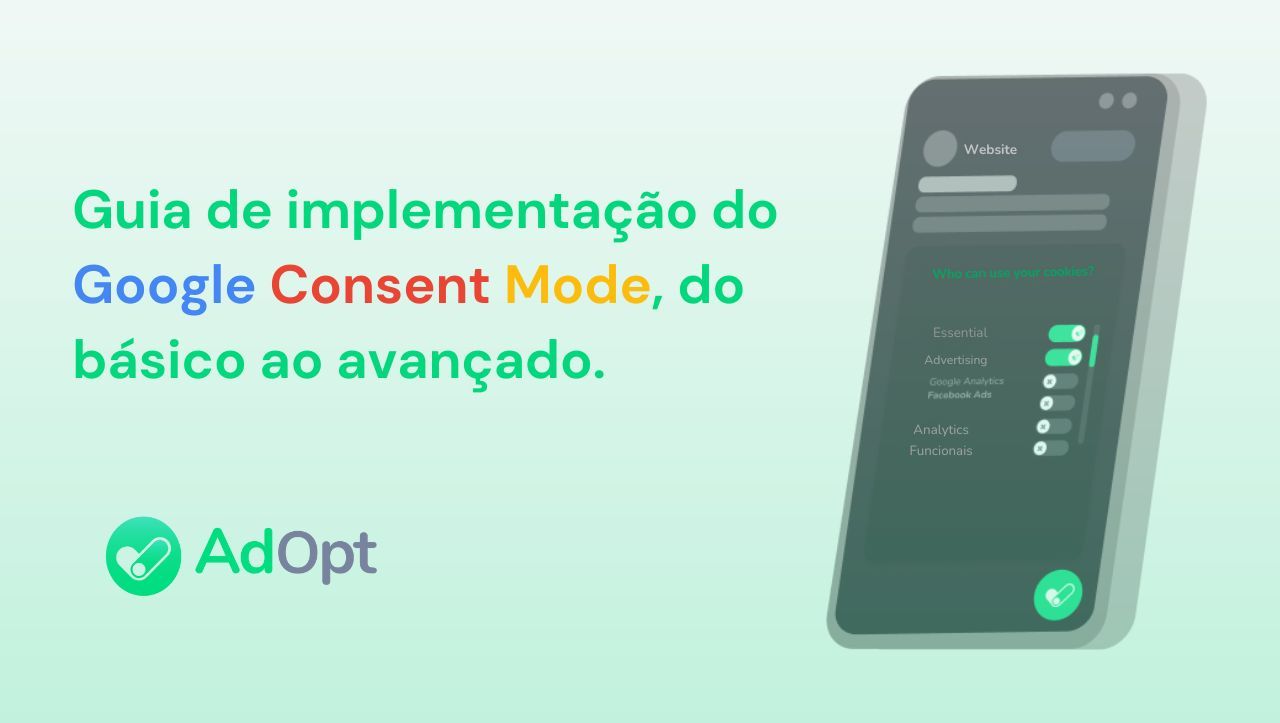
Google Consent Mode: Beginner to Advanced Guide.
Google Consent Mode (GCM) is nothing more than a way for you to integrate the consent you collect from your visitors into Google technologies. In this way, upon receiving this consent information, collection can only occur with authorization, thus complying with the legislation and having direct evidence of compliance as defense for both you and Google.
California CCPA and Cookies: All You Need to Know
Everything about the California CCPA and CPRA: who must comply, the $25M threshold, 7 consumer rights, CCPA vs CPRA explained, the Do Not Sell link, CPPA enforcement, and cookies.

IOWA ICDPA: DSAR and Privacy Portal
Iowa ICDPA DSAR guide: 90-day response deadline, 45-day extension, 60-day appeal process, limited deletion scope, opt-out from data sales, targeted advertising disclosure requirement, and 90-day cure period.

5 Common Cookie Consent Mistakes Hurting Your Compliance
Discover the 5 common **cookie consent mistakes** that risk your **compliance** and learn how to avoid heavy **fines**. Simplify your **data privacy** strategy using a reliable **[Cookie notice/banner](https://goadopt.io/en/blog/why-the-cookie-banner/)**.

AdOpt CMP
AdOpt CMP: Google-certified consent platform with prior blocking, granular choices, encrypted logs, and GTM/Consent Mode

LGPD and Cookies all do you need to know?
In this article, you will have a great introduction to the topic, as well as various other variations that revolve around the subject: Cookies and LGPD.
Oregon OCPA: Cookies Policy
What the Oregon OCPA requires from your Cookies Policy: opt-out link, GPC from January 2026, opt-out without authentication, derived data in scope, teen protections, and the elimination of the cure period.

Why are cookie banners everywhere?
Want to understand why there are cookie banners on every website you visit today? This article is for you!

Texas TDPSA: Under the DSAR
Brings a new era of consumer rights—and at the heart of it is the Data Subject Access Request (DSAR). This article is your go-to guide for understanding what a DSAR is, how to handle it properly, and why your business needs a streamlined process to stay compliant and build trust with Texas consumers.
Oregon OCPA: Privacy Policy
What the Oregon OCPA requires from your Privacy Policy: actively monitored contact channel, detailed third-party descriptions, derived data in scope, GPC from January 2026, and the elimination of the cure period.
Montana MTCDPA: DSAR Policy
Rights, Policy and how to understand about the DSAR Montana MTCDPA
IOWA ICDPA: Cookies Policy
What the Iowa ICDPA requires from your Cookies Policy: opt-out for data sales and targeted advertising, opt-out model for sensitive data, no GPC requirement, no specific link text required, and the 90-day cure period.

Utah UCPA: Privacy Policy
What the Utah UCPA requires from your Privacy Policy: five mandatory elements, opt-out model for sensitive data, no retention periods required, no active contact channel mandate, and the guaranteed 30-day cure period.

Canada PIPEDA: Cookies Policy
What a PIPEDA cookie policy must say: purposes, third parties, opt-out, retention and Quebec rules. Plus a checklist to write yours.

How to Choose a CMP (Consent Management Platform)?
Using a CMP (Consent Management Platform) is a great way to make efforts to adapt to new privacy regulations like GDPR, LGPD, DPDPA, CCPA and more...
Florida FDBR: Cookies Policy
What the Florida FDBR requires from your Cookies Policy: targeted advertising across affiliated sites, opt-out for sensitive data and voice recognition, dark patterns, and tripled penalties.
Connecticut CTDPA and Cookies: All You Need to Know
The Connecticut Data Privacy Act (CTDPA) is a state regulation designed to protect the privacy of Connecticut residents. It also regards cookies, so in this article we will help you understand all about this new privacy regulation.
Florida FDBR: DSAR Privacy Portal
How to handle DSARs under the Florida FDBR: 7 consumer rights, two required submission channels, 45-day deadline with only 15-day extension, tripled penalties for children, and compliance guide.
California CCPA: DSAR Privacy Portal
How to handle DSARs under the California CCPA/CPRA: 7 consumer rights, 45-day deadline, toll-free number required, 12-month lookback, private right of action for breaches, and CPPA enforcement.

New Hampshire NHDPA: DSAR Privacy Portal
What is a DSAR under NHDPA? Complete guide to consumer rights, response deadlines, and building a compliant Privacy Portal for your site.

What is the difference between cookies, local storage, and session storage?
Despite cookies being more well-known, what is the main difference between cookies and session storage and local storage? Why choose one over the other? This article will help you with these doubts!

Meta Pixel Consent: How to Run the Pixel Under GDPR and CCPA
Meta pixel consent explained: when the pixel must wait for a yes, how revoke and grant work, and what Limited Data Use does for US visitors.

Global Privacy Control (GPC) Explained: What It Is and Who Has to Honor It
Global Privacy Control (GPC) is a browser opt-out signal. Learn how it works, which US states require you to honor it, and how to test your site.
Connecticut CTDPA: Privacy Policy
What the Connecticut CTDPA requires from your Privacy Policy: active email contact, opt-out link, 15-day consent revocation, opt-out preference signal from January 2025, and teen protections.
Florida FDBR: Privacy Policy
What the Florida FDBR requires from your Privacy Policy: annual updates, 6 mandatory content categories, specific notices for sensitive and biometric data sales, and the 7 consumer rights.

Canada PIPEDA: DSAR Privacy Portal
How to handle PIPEDA access requests (DSAR): the 30-day deadline, extensions, refusals, costs, Quebec portability and how to run a privacy portal.
Explore AdOpt
Autor
João Bruno
11 Aug 2025
AdOpt


Relevant posts

What is a privacy policy?
Colorado CPA and Cookies: All You Need to Know
Tennessee TIPA and Cookies: All You Need to Know
Florida FDBR and Cookies: All You Need to Know
Texas TDPSA and Cookies: All You Need to Know
Google Consent Mode: Beginner to Advanced Guide.
Oregon OCPA and Cookies: All You Need to Know

Axeptio Strengthens its International Expansion with the Acquisition of AdOpt
Utah UCPA and Cookies: All you need to know

How to choose a Cookie Banner for your website


Address: 7345 W Sand Lake Road, Ste 210 Office 5898 Orlando, FL 32819
15 Rue du Général Campredon, 34000 Montpellier, France
207 Rue de Bercy, 75012 Paris, France
EIN: 86-3965064
Phone: +1 (407) 768-3792
AdOpt
Resources
Product
Certifications