We've created a cookie banner plugin.
More than 30,000 people use AdOpt's cookie notice daily to comply with various privacy regulations around the world.
In our "Big Dream," all goals and aspirations point toward a global operation.
Today, we can confidently say that AdOpt is getting closer to this goal every day!
The Cookie Plugin for WordPress is a crucial element in our global expansion strategy!
The WordPress platform powers nearly 450 million websites globally, and it's estimated that 50% of Brazilian websites are on this platform. In other words, there are many people using and contributing to the community daily!
But getting here wasn't easy!
The initial sketches of the plugin began in 2020. At that time, AdOpt was virtually unknown, and very few believed that LGPD would actually come into effect. So, as we always prioritize transparency, agility, and quality, our plugin, on one of the world's largest platforms, couldn't be "just another one."
Therefore, we outlined some key objectives that would lead us to develop our Cookie Plugin for WordPress with excellence!
-
Implement Version 2 of the Platform, more robust and scalable - Released in Dec/2021
-
Allow AdOpt users to comply with multiple regulations and languages! - Released in Apr/2021
-
Provide more autonomy and flexibility for our customers to customize 100% of the Cookie Banner text as needed - Released in Apr/2021
We have listed the above points as the pillars of our minimum requirements to offer a good plugin worthy of the WordPress community. We believe that in doing so, we reinforce our value of providing "compliance with LGPD, GDPR, and CCPA... even with the free plan"!
At AdOpt, we are obsessed with a platform that is always easier and more intuitive for users.
So, know that many more exciting features are yet to come!
We are working tirelessly to expand our integrations and partnerships so that anyone, even without any coding or programming experience, can confidently ensure their websites comply with all the world's privacy laws with just a few clicks.
Want to install the Cookie Plugin for WordPress from AdOpt on your website?
Below is a tutorial to help you!
-
Install the Cookie Plugin for WordPress.
-
Simply copy the ID of your Cookie Notice from AdOpt.
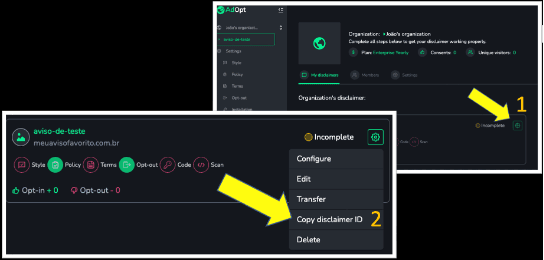
-
Activate the Plugin and paste the Banner ID.
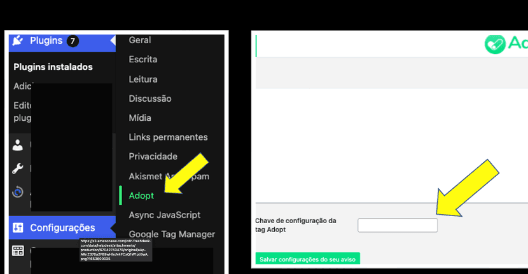
-
Save.
-
That's it! The plugin will automatically install AdOpt's tag on your site.
No coding, no complications.
If you have any questions, here's a more detailed tutorial for your reference, okay?
Before installing any plugin, see how to choose a cookie banner. To understand what the banner does after installation, read how the cookie banner works. To see everything the platform behind the plugin offers, read about the AdOpt CMP.
Tags
Related posts

Florida FDBR and Cookies: All You Need to Know
Everything you need to know about the Florida Digital Bill of Rights (FDBR): who must comply, the $1 billion threshold, 7 consumer rights, FIPA vs FDBR explained, penalties, and cookies.

IOWA ICDPA and Cookies: All you need to Know
Iowa ICDPA explained: the longest response deadline of all US state privacy laws (90 days), 90-day cure period, opt-out for sensitive data, limited deletion scope, no right to correct, and how it compares to UCPA, VCDPA, and OCPA.

AdOpt CMP
AdOpt CMP: Google-certified consent platform with prior blocking, granular choices, encrypted logs, and GTM/Consent Mode

Colorado CPA: Cookies Policy
What the Colorado CPA requires from your Cookies Policy: mandatory Universal Opt-Out Mechanism from July 2024, targeted advertising definition, dark pattern rules, and the 24-month consent refresh.

Montana MTCDPA: Privacy Policy
Learn what your MTCDPA Privacy Policy must include after Montana's SB 297 amendments from the conspicuous "privacy" hyperlink and last-updated date requirements to sale disclosures, minor protections, and how to keep your notice operationally aligned with your stack.

Why Give Consent on Every Website I Visit?
Have you ever noticed that every time you sign up for a service to access information or register on a website for purchases, you need to give consent? If you're wondering why you have to give consent on every website you visit, you'll find the answer here.

7 Steps to GDPR-Compliant Cookie Banners in 2025
Learn the essential steps for creating GDPR-compliant cookie banners in 2025, ensuring user consent and privacy protection.

Utah UCPA and Cookies: All you need to know
Utah UCPA explained: the most business-friendly US state privacy law, dual threshold requirement, opt-out for sensitive data, no right to correct, guaranteed 30-day cure period, and key differences from other state laws.

5 Signs Your Website Needs an Cookie Consent Strategy
How does your website handle LGPD? What strategies does it use to comply with the General Data Protection Law? Have you thought about using a cookie notice but don't know if your site has cookies or if it's enough? If you can't answer these questions, be cautious! Your page may be exposed to fines and other sanctions.

California CPRA: DSAR and Privacy Portal
California CPRA DSAR guide: new rights to correct and limit SPI, opt-out without multiple steps, GPC as valid opt-out, 12-month minor rule, private right of action, and CPPA enforcement.

Texas TDPSA and Cookies: All You Need to Know
Your website have users accessing from Texas? So be ready… the Texas Data Privacy and Security Act is here to shake things up. Don't worry; we've got your back. This guide will walk you through everything you need to know to ensure your website complies with the new regulations.

Virginia VCDPA: Cookies Policy
What the Virginia VCDPA requires from your Cookies Policy: targeted advertising disclosure, consent standards, tracker categories, opt-out mechanisms, and the 30-day cure period explained.
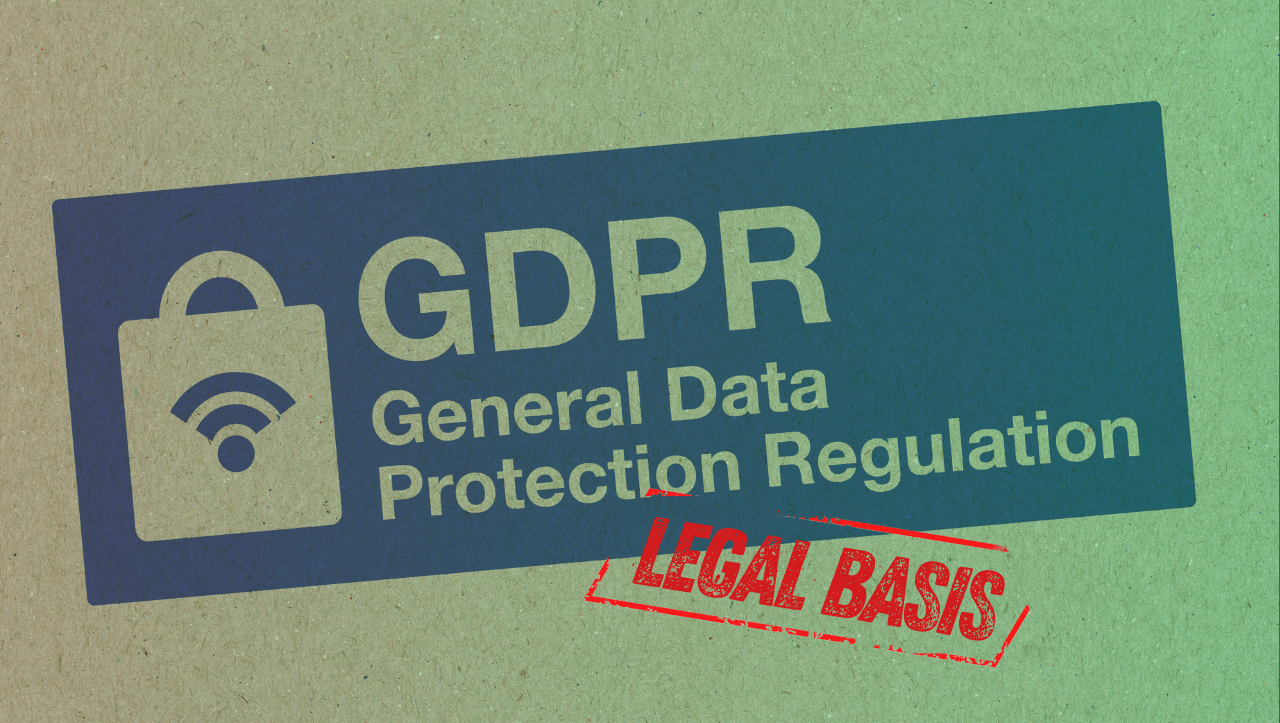
GDPR Legal Basis: An Introduction
In this article, we'll explore the GDPR foundations and provide practical insights from the basics to more advanced concepts of its legal basis.

LGPD: An Opportunity for Digital Marketing Agencies!
Have you ever thought that your marketing agency could find a great business opportunity in LGPD? Well, unlike what many think, it brings changes that can accelerate the demand for the services of these companies.

Connecticut CTDPA: DSAR Privacy Portal
How to handle DSARs under the Connecticut CTDPA: 5 consumer rights, opt-outs without mandatory authentication, 60-day appeal deadline, 15-day consent revocation, and AG-only enforcement.

Google Consent Mode: Beginner to Advanced Guide.
Google Consent Mode (GCM) is nothing more than a way for you to integrate the consent you collect from your visitors into Google technologies. In this way, upon receiving this consent information, collection can only occur with authorization, thus complying with the legislation and having direct evidence of compliance as defense for both you and Google.

The Impact of Cookie Banners on Your E-commerce - LGPD
Having a cookie banner on your brand's website has become indispensable for many. However, for e-commerce websites, it has practically become an obligation to have one. This is because this type of website has a technological composition in which cookies are a structural part. Login flow, items in the shopping cart, recommendation showcases, remarketing... Most of them rely on cookies.
Colorado CPA and Cookies: All You Need to Know
The Colorado Consumer Privacy Act went into effect July 1, 2023 (CPA). CPA is a vital piece of legislation designed to protect the privacy of residents in Colorado. Understanding its requirements is essential for any business operating in the state. This act is all about giving control back to the consumers regarding their personal data. But what does this mean for you and your business, especially when it comes to managing cookies on your website?

Oregon OCPA and Cookies: All You Need to Know
Everything about the Oregon OCPA: who must comply, the payment transaction exclusion, 25% revenue threshold, derived data in scope, GPC requirement from January 2026, and elimination of the cure period.
IOWA ICDPA: DSAR and Privacy Portal
Iowa ICDPA DSAR guide: 90-day response deadline, 45-day extension, 60-day appeal process, limited deletion scope, opt-out from data sales, targeted advertising disclosure requirement, and 90-day cure period.

5 Common Cookie Consent Mistakes Hurting Your Compliance
Discover the 5 common **cookie consent mistakes** that risk your **compliance** and learn how to avoid heavy **fines**. Simplify your **data privacy** strategy using a reliable **[Cookie notice/banner](https://goadopt.io/en/blog/why-the-cookie-banner/)**.

LGPD and Cookies all do you need to know?
In this article, you will have a great introduction to the topic, as well as various other variations that revolve around the subject: Cookies and LGPD.
Oregon OCPA: Cookies Policy
What the Oregon OCPA requires from your Cookies Policy: opt-out link, GPC from January 2026, opt-out without authentication, derived data in scope, teen protections, and the elimination of the cure period.

Why are cookie banners everywhere?
Want to understand why there are cookie banners on every website you visit today? This article is for you!

GDPR and Cookies all you need to know
Understanding the General Data Protection Regulation (GDPR) and its impact on cookies is essential. So, let's break it down, step by step.

California CCPA: DSAR Privacy Portal
How to handle DSARs under the California CCPA/CPRA: 7 consumer rights, 45-day deadline, toll-free number required, 12-month lookback, private right of action for breaches, and CPPA enforcement.
Oregon OCPA: Privacy Policy
What the Oregon OCPA requires from your Privacy Policy: actively monitored contact channel, detailed third-party descriptions, derived data in scope, GPC from January 2026, and the elimination of the cure period.
Montana MTCDPA: DSAR Policy
Rights, Policy and how to understand about the DSAR Montana MTCDPA
IOWA ICDPA: Cookies Policy
What the Iowa ICDPA requires from your Cookies Policy: opt-out for data sales and targeted advertising, opt-out model for sensitive data, no GPC requirement, no specific link text required, and the 90-day cure period.

Utah UCPA: Privacy Policy
What the Utah UCPA requires from your Privacy Policy: five mandatory elements, opt-out model for sensitive data, no retention periods required, no active contact channel mandate, and the guaranteed 30-day cure period.
California CCPA: Privacy Policy
What the California CCPA/CPRA requires from your Privacy Policy: 12-month lookback, annual updates, Do Not Sell link, sensitive PI disclosures, toll-free number, and the 7 consumer rights.
Florida FDBR: Cookies Policy
What the Florida FDBR requires from your Cookies Policy: targeted advertising across affiliated sites, opt-out for sensitive data and voice recognition, dark patterns, and tripled penalties.
Connecticut CTDPA and Cookies: All You Need to Know
The Connecticut Data Privacy Act (CTDPA) is a state regulation designed to protect the privacy of Connecticut residents. It also regards cookies, so in this article we will help you understand all about this new privacy regulation.
Florida FDBR: DSAR Privacy Portal
How to handle DSARs under the Florida FDBR: 7 consumer rights, two required submission channels, 45-day deadline with only 15-day extension, tripled penalties for children, and compliance guide.

New Hampshire NHDPA: DSAR Privacy Portal
What is a DSAR under NHDPA? Complete guide to consumer rights, response deadlines, and building a compliant Privacy Portal for your site.

What is the difference between cookies, local storage, and session storage?
Despite cookies being more well-known, what is the main difference between cookies and session storage and local storage? Why choose one over the other? This article will help you with these doubts!
Connecticut CTDPA: Privacy Policy
What the Connecticut CTDPA requires from your Privacy Policy: active email contact, opt-out link, 15-day consent revocation, opt-out preference signal from January 2025, and teen protections.
Florida FDBR: Privacy Policy
What the Florida FDBR requires from your Privacy Policy: annual updates, 6 mandatory content categories, specific notices for sensitive and biometric data sales, and the 7 consumer rights.
California CCPA: Cookies Policy
What the California CCPA/CPRA requires from your Cookies Policy: Do Not Sell or Share link, GPC compliance, sale vs sharing distinction, sensitive PI opt-out, and annual updates.

Virginia VCDPA and Cookies: All you need to know
Everything you need to know about the Virginia Consumer Data Protection Act (VCDPA): who must comply, consumer rights, cookie requirements, penalties, and how to get your site in compliance.
California CCPA and Cookies: All You Need to Know
Everything about the California CCPA and CPRA: who must comply, the $25M threshold, 7 consumer rights, CCPA vs CPRA explained, the Do Not Sell link, CPPA enforcement, and cookies.

How to choose a Cookie Banner for your website
What are the criteria for this choice, and what are the strengths and weaknesses of each option? Well, we're here to help you because this decision needs to be well thought out!
New Hampshire NHDPA and Cookies: All you need to know
Discover what the New Hampshire Privacy Act (NHDPA) means for your business. Learn about compliance steps, consumer rights, penalties, and how to simplify it all with AdOpt, a Google-certified CMP.

How long can we ignore LGPD?
LGPD is in effect. Despite that, there are still many companies ignoring it, but is that possible? How long can we ignore LGPD?
MTCDPA Montana and Cookies: All you need to know
Find out if the MTCDPA applies to your site, key compliance deadlines, and new rules for cookies and consent in Montana
Explore AdOpt
Autor
João Bruno
13 Sep 2023
AdOpt


Relevant posts

What is a privacy policy?
Colorado CPA and Cookies: All You Need to Know

Tennessee TIPA and Cookies: All You Need to Know
Florida FDBR and Cookies: All You Need to Know
Texas TDPSA and Cookies: All You Need to Know
Google Consent Mode: Beginner to Advanced Guide.

Axeptio Strengthens its International Expansion with the Acquisition of AdOpt
Oregon OCPA and Cookies: All You Need to Know
Utah UCPA and Cookies: All you need to know
How to choose a Cookie Banner for your website


Address: 7345 W Sand Lake Road, Ste 210 Office 5898 Orlando, FL 32819
15 Rue du Général Campredon, 34000 Montpellier, France
207 Rue de Bercy, 75012 Paris, France
EIN: 86-3965064
Phone: +1 (407) 768-3792
AdOpt
Resources
Product
Certifications